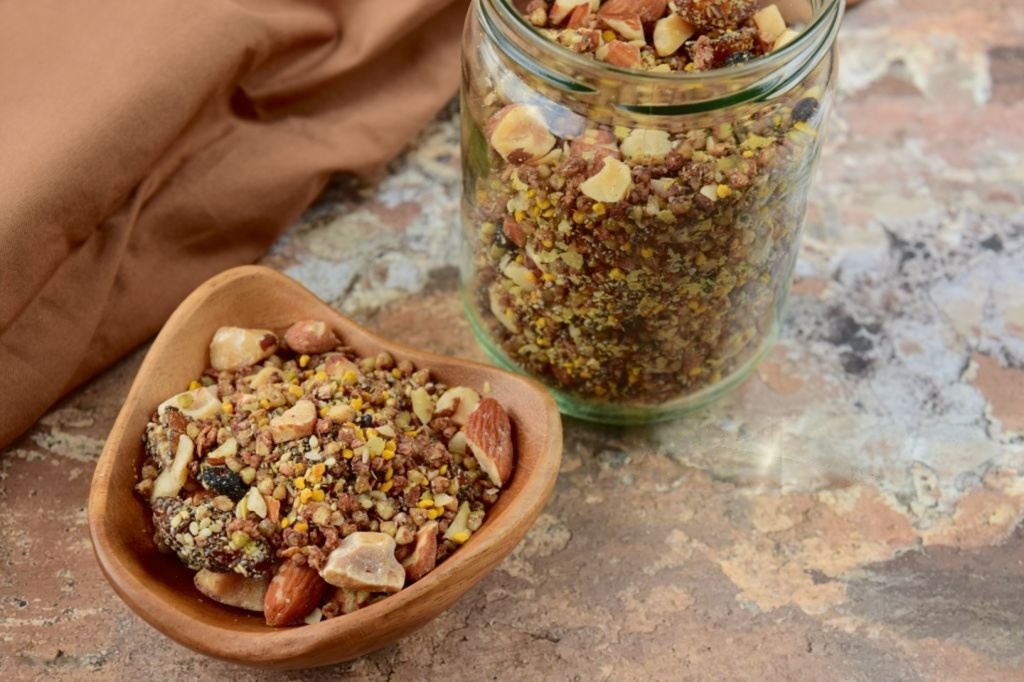
“Weight Loss Dry Fruit Energy Mix-Healing with Strength”
There are certain aromas that stay with you forever — the nutty scent of roasted semolina, the sweet earthiness of jaggery melting in warm ghee, and the delicate hint of cardamom and fennel wafting through the house. That’s exactly how my grandmother’s kitchen smelled every winter.
Every year, as the winds turned cooler, she would sit on a wooden stool, carefully measuring almonds, pistachios, and edible gum. The recipe was a family ritual — more than food, it was a tradition of love, warmth, and wellness. This ancient mixture, known as Panjiri or Gond Gur Sooji Mix, has been prepared across South Asia for centuries — from the rural homes of Punjab and Sindh to the royal kitchens of Rajasthan and Gujarat.
Discover the centuries-old Asian recipe Gond Gur Sooji Panjiri — a wholesome blend of edible gum, jaggery, semolina, and dry fruits. Perfect for new mothers, weight management, and winter nourishment. Learn its benefits, calorie details, and how much to eat daily.
It’s more than a dessert — it’s a healing food, designed by our ancestors to nourish the body through cold winters, postpartum recovery, and fatigue. Today, with a modern lifestyle that often drains our energy, this golden recipe feels more relevant than ever.
In our family, it’s a cherished tradition that whenever a woman welcomes a new baby, this nourishing Panjiri is always prepared. It’s more than just food — it’s a celebration. Everyone in the house eagerly looks forward to tasting this rich, comforting dessert, especially on those chilly winter days when relatives and siblings gather to share warmth and joy.
When I gave birth to my daughter, my mother lovingly made a large pot of Panjiri and served it to me every day with a glass of warm milk. It was not only delicious and fulfilling but also incredibly energizing — giving me the strength I needed during those demanding early days of motherhood. She often added in oats, semolina, or milk for variety, creating subtle changes in flavor while keeping the same healing essence. Each bowl made me feel nourished, comforted, and truly cared for.
🌸 The Asian History of Panjiri: A Legacy of Nourishment
In ancient Ayurvedic texts, Panjiri was classified as a “postpartum restorative food” and a winter tonic. Historically, Indian and Pakistani women made it during childbirth recovery and seasonal transitions. Its ingredients — jaggery, ghee, gond, and semolina — were chosen deliberately for their warming and healing properties.
Ghee improved nutrient absorption and joint lubrication.
Edible gum (gond) strengthened bones and boosted postpartum recovery.
Nuts and seeds provided healthy fats for brain and hormonal balance.
Even Ayurvedic healers prescribed it for vata imbalance, fatigue, or weakness. In old Punjab and Rajasthan, farmers ate it before working in the fields, while mothers gave it to children as a morning energy booster during winter months. It wasn’t seen as dessert — it was functional food, designed to sustain body strength through nature’s toughest season
🧘♀️ How It Helps in Weight Management
While Panjiri is nutrient-dense, moderation is the key. Here’s how it supports healthy weight balance:
Satiety & Energy Stability: The combo of protein, good fats, and complex carbs provides long-lasting fullness, reducing sugar cravings and overeating.
Hormonal Support: The healthy fats from nuts and ghee support hormonal balance — essential for metabolism and fat regulation.
Blood Sugar Control: Jaggery offers a slower release of sugar than refined sugar, preventing energy spikes and crashes.
Digestive Aid: Fennel, cardamom, and semolina enhance digestion, reduce bloating, and improve nutrient absorption.
Postpartum Weight Regulation: For nursing mothers, it supports milk production while restoring strength — which can indirectly help in gradual, healthy weight normalization.
🧍♀️ Who Can Eat This Recipe
✅ Ideal For:
New nursing mothers needing strength and lactation support.
People recovering from illness or surgery.
Anyone experiencing fatigue or nutrient deficiencies.
Individuals on natural, traditional, or whole-food diets.
Those seeking healthy winter snacks instead of processed sweets.
⚠️ Who Should Avoid It
❌ Not Recommended For:
People with diabetes or insulin resistance (due to jaggery).
Those with nut allergies.
Individuals with obesity unless strictly portion-controlled.
Anyone advised to avoid saturated fats or high-calorie foods.
🥄 Recommended Daily Intake for Weight Management
If you’re trying to lose weight but still want to enjoy this nutrient powerhouse:
Consume 1 tablespoon (about 25g) per day as a mid-morning or pre-workout snack.
Pair it with warm water or green tea to boost digestion.
Avoid taking it late at night as it’s calorie-dense.
For nursing mothers or those needing extra energy, 2–3 tablespoons daily are beneficial.
💬 A Little Story from My Own Experience
When I became more health-conscious, I stopped eating traditional sweets — assuming they were all “unhealthy.” But during one winter visit, my mother offered me a small bowl of this Panjiri and said, “Beta, this isn’t mithai, it’s medicine that tastes sweet.” That sentence stayed with me.
I began studying its nutritional value — the combination of amino acids, iron, and calcium makes it a natural supplement disguised as comfort food. I started having a spoonful every morning before yoga, and surprisingly, I didn’t feel hungry until lunch. My energy felt balanced, and my cravings for packaged snacks disappeared. That’s when I realized — traditional foods often hide the wisdom modern diets chase.
🍃 Cultural Connection and Emotional Warmth
Panjiri is more than a recipe; it’s a symbol of care. In South Asian homes, mothers and grandmothers make it for daughters after childbirth, for sons during exams, and for elders during winter. It’s a sign of affection — a reminder that nourishment is love in edible form.
In Pakistani, Indian, and Nepali households, this recipe carries multiple names — Gond ke Laddu, Dinkachi Barfi, or Sooji Panjiri — yet the emotion behind it remains universal: restoring strength and spirit.
💚 Health Benefits at a Glance
Benefit
Explanation
Boosts Immunity
Antioxidant-rich nuts and seeds enhance immune function
Strengthens Bones
Edible gum and sesame seeds provide natural calcium
Improves Digestion
Fennel and cardamom reduce bloating and indigestion
Supports Lactation
Healthy fats and gond increase milk flow
Enhances Skin & Hair
Vitamin E and zinc from nuts nourish skin glow
Aids Hormonal Balance
Healthy fats stabilize estrogen and cortisol levels
This Gond Gur Sooji Panjiri is a treasure chest of nutrition, rooted deeply in South Asian tradition. It represents balance — energy and calm, sweetness and strength, comfort and wellness.
Whether you’re a new mom rebuilding your body, someone striving for clean energy, or just a food lover seeking connection to your roots — this recipe is for you.
It’s proof that food can heal, history can nourish, and flavor can carry wisdom across generations. So, next time you crave something sweet and wholesome, skip the processed bars — take a spoonful of this golden mix instead. 🌼
New mothers or post-delivery women can also try all the recipes below to stay healthy and energized.
Discover the centuries-old Asian recipe Gond Gur Sooji Panjiri — a wholesome blend of edible gum, jaggery, semolina, and dry fruits. Perfect for new mothers, weight management, and winter nourishment. Learn its benefits, calorie details, and how much to eat daily.
Ingredients
For Jaggery Syrup:
½cup water
300g jaggery
1tbsp. cardamom powder
1tbsp. crushed fennel seeds
For the Panjiri Base:
2tbsp desi ghee
100g lotus seeds
2tbsp desi ghee
100g edible gum (gond)
2tbsp desi ghee
125g almonds
125g pistachios
125g cashew nuts
125g walnuts
125g dried coconut (sliced)
¼cup dried melon seeds (char maghaz)
¼cup pumpkin seeds
3tbsp sesame seeds
1cup desi ghee
300g semolina
3tbsp poppy seeds
Step-by-Step Directions
1
1. Prepare Jaggery Syrup:
In a pan, add water and jaggery. Don’t stir initially — let it melt naturally over medium heat. Add cardamom and fennel powders, stir gently, and cook for 4–5 minutes until jaggery dissolves. Let it cool completely before using.
2
2. Roast Lotus Seeds:
In a wok, melt ghee and fry lotus seeds on low flame for 2–3 minutes until crisp. Set aside to cool.
3
3. Fry Edible Gum:
Heat ghee again, add gond, and fry on low until it puffs up. Stir continuously to avoid burning. Remove and cool.
In the same wok, add 1 cup ghee and semolina. Roast on low flame for 8–10 minutes until golden brown and aromatic. Add poppy seeds and stir.
6
6. Combine and Chop:
Coarsely chop the roasted lotus seeds and fried gond in a food chopper. Do the same with the dry fruits.
7
7. Mix and Bind:
In a large bowl, combine chopped ingredients, roasted semolina, poppy seeds, and the cooled jaggery syrup. Mix well until evenly coated.
8
8. Cool & Store:
Let it rest completely, then transfer to an airtight glass jar. It keeps up to 10 days at room temperature or a month refrigerated.
Nutrition Facts
Amount Per Serving
Calories270kcal
% Daily Value *
Total Fat16g25%
Total Carbohydrate22g8%
Dietary Fiber3g12%
Sugars10g
Protein6g12%
Calcium 6 mg
Iron 8 mg
Magnesium 20 mg
* Percent Daily Values are based on a 2,000 calorie diet. Your daily value may be higher or lower depending on your calorie needs.
Keywords:
Superfoods, Dry fruit energy, Gond gur panjiri recipe, Traditional postpartum food Pakistan India, Healthy winter recipe South Asia, Weight loss desi energy mix, Natural lactation food, Ayurvedic energy ball recipe, Gond ke laddu for mothers, Nutrient-rich Pakistani dessert
Pin this recipe to share with your friends and followers.
Shania
Nature in Nutrient's Healthy recipes
Hi, I'm Shania, a mother of two adorable kids. I live in UAE with my family. My passion lies in creating and sharing wholesome recipes designed for those striving to stay healthy, active, and in shape. I believe food is medicine, so I share nourishing recipes with those who dream of staying healthy, active, and confidently slim.